Selected Work
Thanx Ordering 2.0
Digital Ordering 2.0 is liveAn app should feel like walking into a brand’s best location
Restaurant apps have long been an afterthought: static menus, generic templates, the same screen for every guest. Thanx powers ordering for hundreds of national food chains, and every one of them ran on that same underlying experience.
I spent most of 2025 Q4 on Ordering 2.0, turning it into a platform each brand controls as its own marketing channel: customization through CMS, segmentation and A/B testing, expanded rewards, a reusable gamification framework, and gift cards unified across multiple providers.
From a static experience to a platform brands keep improving
Ordering 2.0 introduced three core capabilities that transformed ordering from a static experience into a platform brands can continuously improve.
Configure — give brands ownership over their digital experience
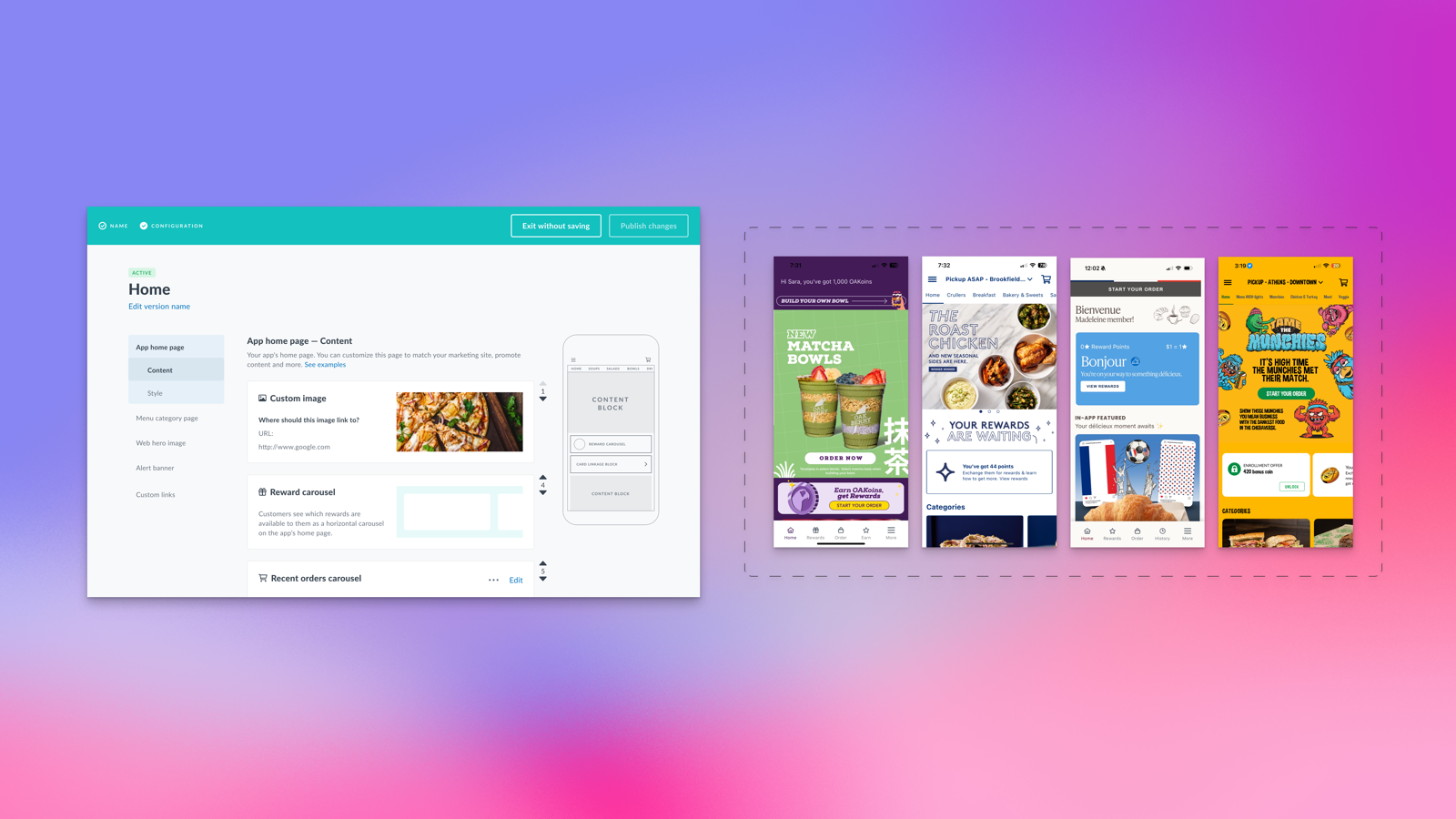
Brands can customize homepage layouts, navigation, promotional content, and visual presentation directly through CMS, without engineering involvement.
Experiment — replace assumptions with measurable customer behavior
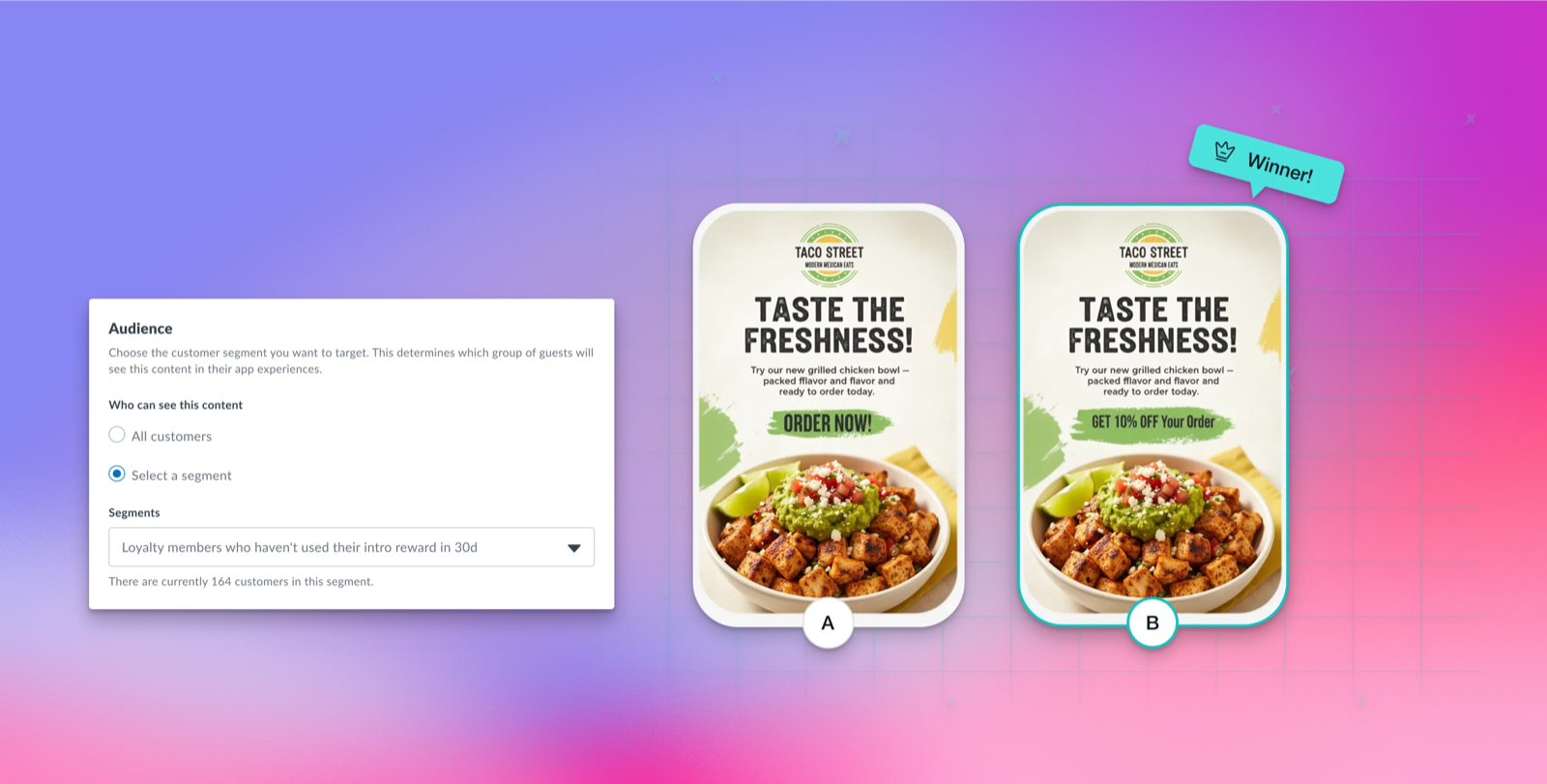
Audience segmentation, A/B testing, and versioning allow brands to personalize experiences, validate ideas, and safely iterate without risking the entire ordering flow.
Extend — grow the platform without reinventing the experience
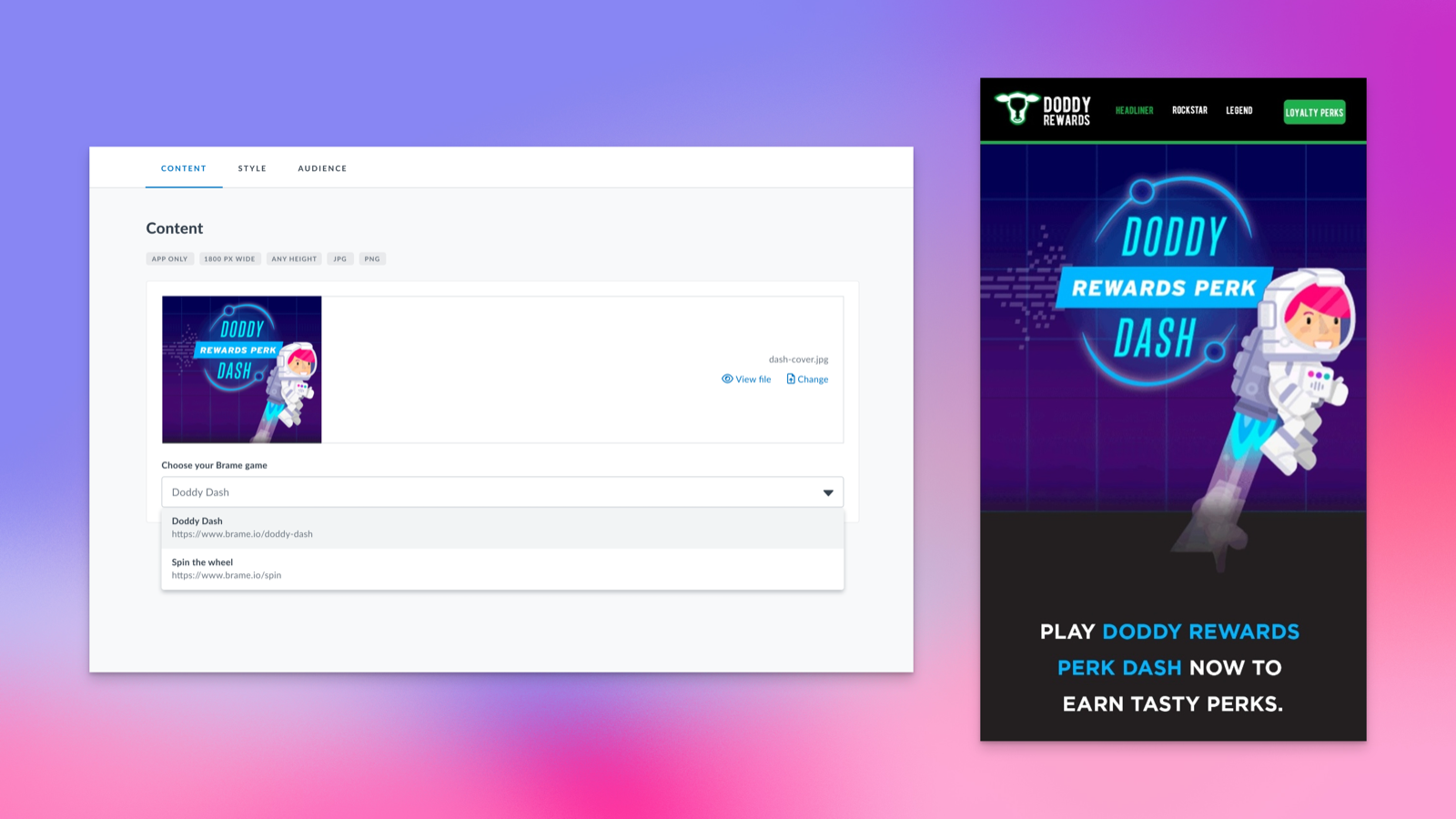
Built on the same platform foundation, new capabilities like Rewards, Gamification, and Gift Cards can be introduced while preserving consistent interaction patterns across the product.
Designing a platform that can scale
Building that many capabilities into one system meant working from a few principles.
Most requests arrived as one brand's specific ask. The useful question was what problem sat underneath it, and how many other brands had a version of that same problem. Solving the pattern instead of the request is what kept the platform from turning into a collection of one-off accommodations.
Every configuration option is a promise to maintain it, document it, and support it for years. So flexibility had to earn its place: exposed where brands genuinely operate differently, held back where a good default served everyone better. Making everything configurable would have made the platform impossible to maintain.
New capabilities kept arriving, and each one could have introduced its own interaction model. Extending patterns that already existed meant rewards, gamification, and gift cards felt like parts of one product rather than features bolted on at different times.
Merchants are seeing real results on the platform
Ordering 2.0 is one part of what drives these platform results. Across the platform, first-time guests are 38% more likely to return for a second purchase, and 90% of brands grow digital sales in their first year.
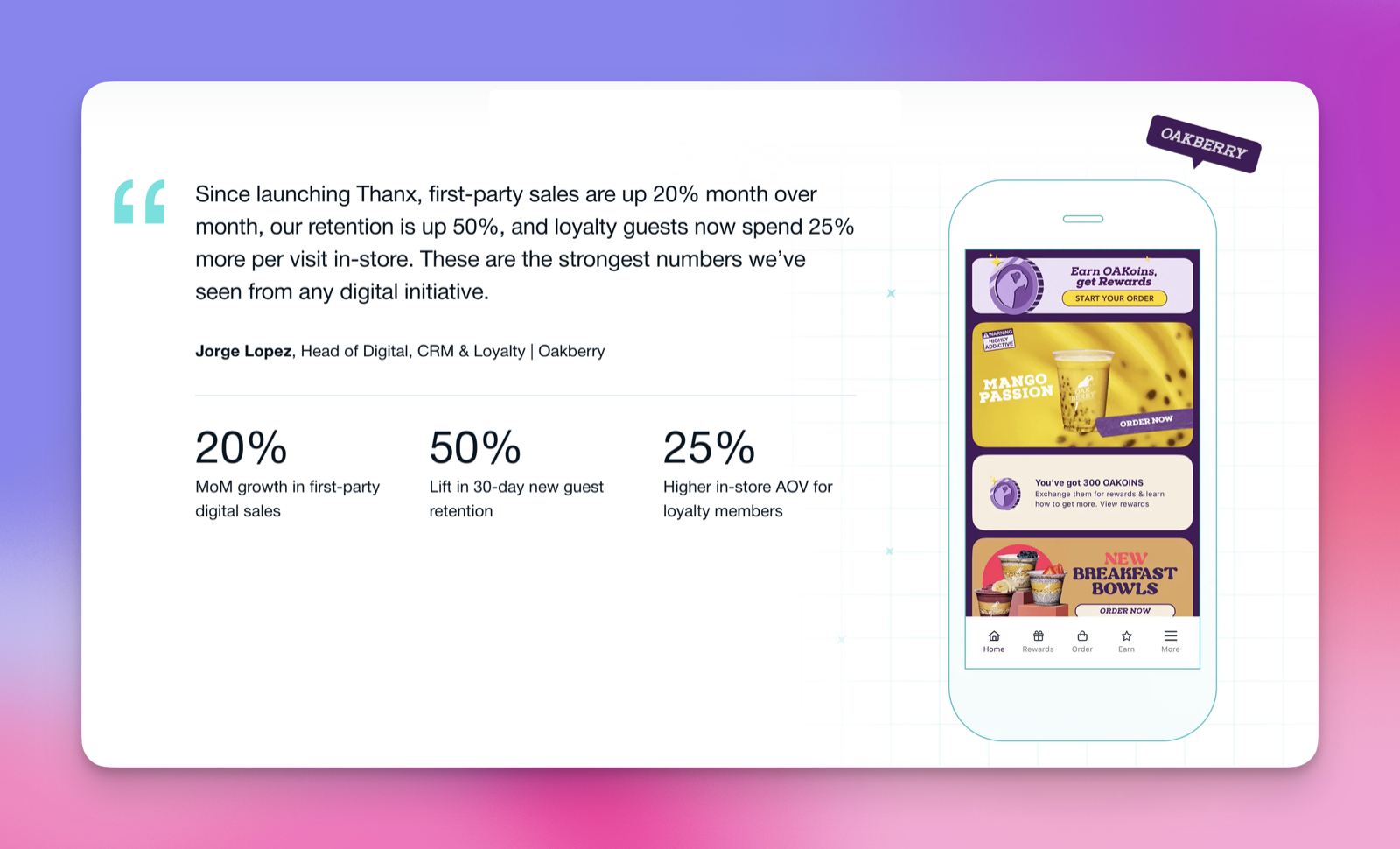
Here’s one of the brands running on it: Oakberry reports first-party sales up 20% month over month and retention up 50%.